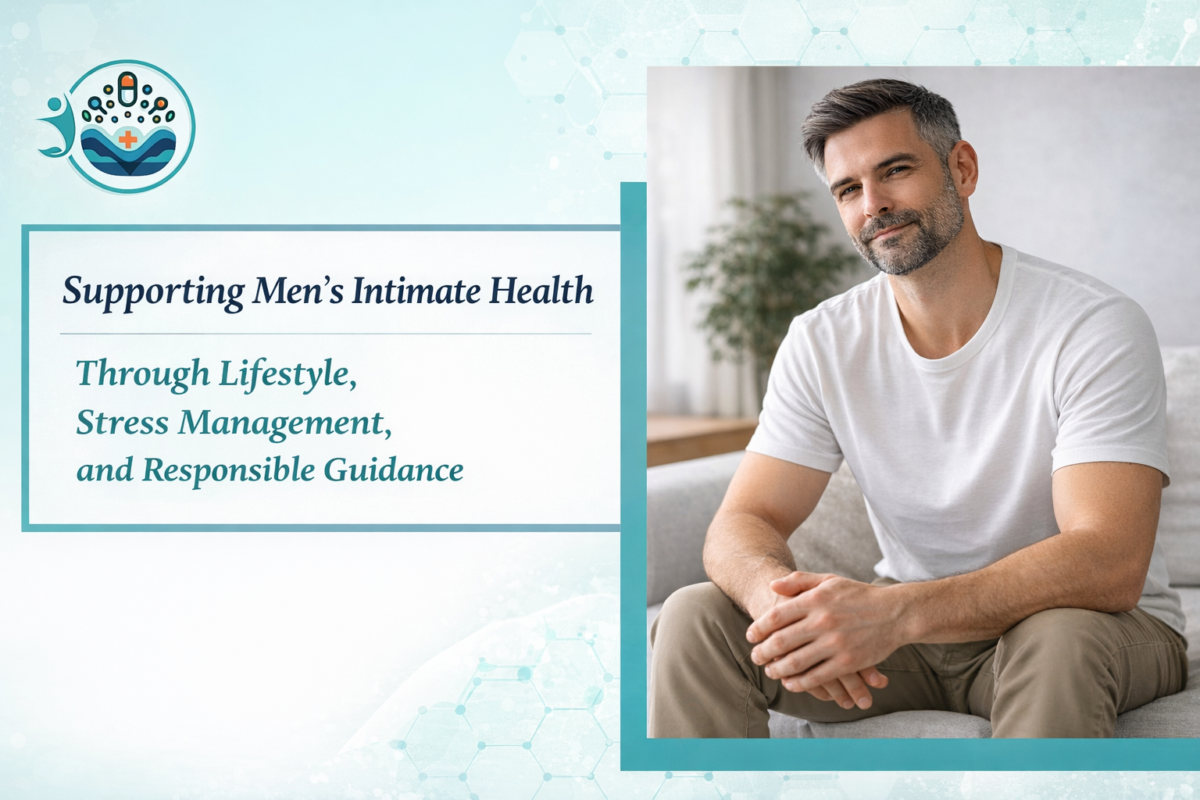
Within our contemporary world, psychological pressure has continued to develop from a challenge to a way of life. This is because life is increasingly beset on all sides by the need to succeed both professionally and economically, as well as satisfy our private and virtual “info-demands.” Even though we are accustomed to evaluating the consequences of this pressure on our productivity, we do not normally refer to the underlying effects on male sexual health.
For many males, changes in physical response and desire patterns can be greeted by inner silence and shame in periods of high pressure. Rather than taking the cue to focus on stress as an external cause, it is easy to identify it as one’s own personal problem. Unpacking the complex relationship between mental stability and physical energy is the first step in making any real changes.
This review will explore the biological mechanism of stress response, the psychological challenges involved, and some effective measures or approaches to gain back health.
Understanding Stress and Anxiety in Men
Stress represents an organic mechanism for survival—it’s often referred to as the “call to arms.” It puts your problems and challenges directly before your focused mind. Anxiety, on the other hand, is what happens when that call to arms becomes an endless loop.
In males, these presentations hardly ever occur in the form of ‘concern’ in the mental state examination. They occur more as follows:
- Widespread mental exhaustion or irritability.
- Poor sleep patterns and chronic exhaustion.
- Lack of ambition. A visible loss of drive.
- Continued physical tension, especially in the neck and shoulder area.
- An inward, precarious sense of self-assurance.
Due to the social scripting which insists upon a male code of “toughing it out,” these problems tend to add up “under the radar,” and eventually affect “the body’s most sensitive systems.”
The Mind–Body Connection and Intimate Health
“The mechanics of intimate health are a far cry from being merely mechanical,” because a “visceral or intimate sense of well-being is a highly intricate affair” involving “both neural signals and endocrine factors, as well as vascular space and integrity.
When the mind is at rest, the body can function properly in its “rest and digest” state. Under highly tense states, there is the “shutdown” of non-essential body functions:
- The Nervous System: The “fight-or-flight” response is concerned with survival over relaxation.
- Endocrine Disruption: It is understood that an overproduction of cortisol functions as an inhibitor of the body’s production of
- Vascular Tension: This results from anxiety, which leads to a constriction of the blood vessel walls and thus prevents the free flow that must occur
- Cognitive Static: A mind occupied with problem-solving ceases to be able to process pleasure through its senses.
How Stress Directly Impacts Intimate Function
1. Lowered Mental Arousal
The brain is the most significant catalyst for desire. When the brain is saturated with professional anxieties or domestic worries, there is no cognitive “bandwidth” left for intimacy. This is not a reflection of a partner’s appeal; it’s just a brain that’s too crowded to engage in intimacy.
2. Stage Fright/Overthinking
Anxiety creates a vicious circle. If a man has a temporary setback due to fatigue, he may start to “spectate”-that is, observe his own physical responses with clinical fear. This self-consciousness jolts him with adrenaline, which effectively kills the very response he is trying to achieve.
3. Hormonal Balance
The “stress hormone” cortisol has an evolutionary counteractive, which is testosterone. Cortisol, if present in the body for an extended period of time, such as weeks and months, has the potential to inhibit the hormones that regulate one’s moods, muscles, and sex drives. This translates to feeling “meh.”
4. Blood Flow and Physical Response
Since a physical reaction is a circulatory process, any impairment in the circulation becomes a hindrance. Stressing the body causes it to redistribute the blood to the key areas for protection, and the functional areas receive less blood when the couple is intimate.
The Emotional Impact on Men
The psychological cost of such problems is often greater than the physical consequences,” Benning states. “Men’s identities are frequently tied to their physical capabilities, so stress-related issues can either cause or result from emotional strain.” Common experiences include:
- Deep feelings of inadequacy
- Retreat from vulnerability and emotional expression
- Avoiding physical closeness out of fear or embarrassment
These internal thought patterns can create an invisible barrier between partners, making it harder to break the cycle of stress. In some cases, men may benefit from medically guided oral support as a short-term aid while they focus on reducing stress, rebuilding confidence, and strengthening emotional connection.
Relationship Stress and Communication Gaps
The intimacy problems caused by stress are further heightened when there is a lack of communication. The man may pull away as a means of defending his ego, but the spouse may think there is a lack of sexual interest or a diversionary interest elsewhere.
By changing the script from “individual failure” to “common stress management,” the pressure can become unreal. Transparency is the best remedy for anxiety based on performance.
Lifestyle Factors That Increase Stress Levels
Contemporary habits tend to have “accelerant” properties for already present anxieties:
Sleep Deprivation: Chronic sleep deprivation is one surefire method of promoting low levels of testosterone and high irritability.
The Sedentary Trap: This is because a person is allowing stress hormones, which would otherwise be circulating through their system, to circulate with their activity levels
Digital Saturation: The blue light and “comparison culture” that comes with social media keep the nervous system on high alert.
Nutritional Imbalance: Diets that consist mainly of chemicals from processed foods and caffeine can cause people to experience physical reactions that can be identical to panic attacks.
Can Stress-Related Intimate Issues Be Reversed?
Fortunately, the answer to the question is a resounding “yes.” Because the root issue is so often functional and not structural, regaining balance in the mind will restore function to the body.
For others, a two-pronged strategy is most effective. In working on lifestyle issues, these men will also employ “safety net” therapies, such as those containing sildenafil-based support options, as a way to regain confidence as they work on decreasing their levels of stress.
Healthy Ways to Reduce Stress and Support Intimate Health
Consistent Motivation: Exercise is a natural metabolic reset for cortisol.
Neurological calming really helps. It does things like breathing and being in the moment to teach our bodies how to stay calm. When we do Neurological Calming exercises, our nervous system learns to relax. Neurological Calming gets our body and mind working. This makes us feel calm and peaceful inside. Neurological Calming is fantastic because, with it, our body and mind work in unison in keeping us calm and peaceful all the time.
Sleep Optimisation: Creating a “no-screen” zone 60 minutes before bed can radically improve hormonal recovery.
Strategic nutrition includes the intake of magnesium-rich greens, omega-3s, and zinc-heavy proteins that support the biological building blocks of health.
Vulnerable Discussion: Talking openly and honestly with a partner takes away the secret of anxiety, which is often 90% of the burden.
When to Seek Professional Support
Realising that you require help from your guide indicates that you are very in touch with your emotions. A health practitioner will help you in the following ways:
- Performing blood panels for the monitoring of vitamin deficiencies and hormone changes.
- Offering cognitive-behavioural strategies to cope with Overthinking
- Talking about supports, safe and pharmaceutical grade if needed, including doctor-guided oral treatment options.
Breaking the Cycle of Stress and Self-Blame
Healthy and feeling good is all about learning not associate how you feel about yourself with how your body feels at any given time. You are not your stress. By learning to take care of your body the way you take care of your friend when it is in your company, your body might start to feel better. Your systems might start to function in the way they are supposed to be able to function. Healthy and feeling good is all about being kind to your body. This takes patience, the kind you might be patient with your friend.
Conclusion
The relation between a man’s mind and his sexual health is very strong. They are actually related. Stress and anxiety are more than feelings. They are things that can alter the function of how our bodies work. A man’s mind and sexual health are actually related.
By recognizing these factors and making changes, men and women, too, because all people struggle, can go from survival to thriving. Awareness is the key to healing and is where the process starts.