In today’s high-performance culture, men are constantly balancing career ambition, family responsibilities, financial goals, and personal development. The pressure to perform consistently can feel overwhelming. Many focus solely on productivity, but true performance is built on something deeper — physical strength, mental resilience, and sustainable daily habits.
Strength training plays a central role in that foundation.
When approached correctly, structured resistance training becomes more than a workout routine. It becomes a lifestyle anchor that supports circulation, discipline, emotional balance, and long-term vitality. Combined with smart wellness habits, it helps men maintain steady energy and confidence without burnout.
This guide explores how strength training supports overall male wellness and how to build a routine that promotes lasting power.
Redefining Strength in the Modern Era
Strength is often misunderstood. Many equate it with lifting heavy weights or achieving a certain physique. While physical development is part of the process, real strength extends further.
True strength includes:
- Reliable daily energy
- Mental clarity under pressure
- Emotional steadiness
- Physical endurance
- Efficient recovery
- Long-term health awareness
Strength is not about intensity alone. It is about consistency.
Why Strength Training Is a Foundation for Men’s Wellness
Resistance training stimulates multiple systems within the body. It improves circulation, activates large muscle groups, supports metabolic function, and enhances overall stamina.
Regular training helps:
- Improve blood flow
- Support heart health
- Increase lean muscle mass
- Enhance posture and mobility
- Strengthen bones
- Support balanced body composition
Over time, these benefits create a stable internal environment that promotes dependable performance.
The Circulation Connection
Healthy circulation ensures oxygen and nutrients reach muscles and organs efficiently. Strength training naturally enhances blood flow by repeatedly challenging muscles and encouraging vascular adaptation.
Improved circulation contributes to:
- Better workout endurance
- Faster recovery
- Sharper focus
- Reduced fatigue
- Overall vitality
For men who spend long hours sitting, resistance training becomes especially important to counteract sedentary patterns.
Structuring an Effective Strength Training Routine
An effective program does not require extreme intensity. Sustainable progress comes from structured, progressive training.
A balanced weekly approach might include:
1. Compound Movements
These exercises engage multiple muscle groups simultaneously:
- Squats
- Deadlifts
- Bench presses
- Rows
- Overhead presses
Compound lifts stimulate overall strength and coordination.
2. Accessory Work
Focused movements improve balance and stability:
- Lunges
- Core training
- Controlled isolation exercises
3. Mobility and Flexibility
Strength without mobility can limit long-term performance. Include:
- Dynamic warm-ups
- Post-workout stretching
- Light recovery sessions
4. Active Recovery
Rest days are essential. Light walking, mobility drills, or gentle cycling promote circulation without strain.
Consistency matters more than intensity.
Nutrition: Fueling Strength and Recovery
Training success depends heavily on nutrition. Balanced meals provide the raw materials required for muscle repair and energy production.
Focus on:
- Lean protein sources
- Whole grains
- Healthy fats
- Fresh fruits and vegetables
- Proper hydration
Avoid extreme dieting or drastic caloric restriction. Sustainable strength requires consistent nourishment.
The Role of Sleep in Muscle Development
Sleep is when recovery truly happens. During deep rest, tissues repair and energy stores replenish.
Men who prioritize sleep often experience:
- Improved strength gains
- Better mood stability
- Reduced fatigue
- Faster recovery between sessions
Establish a consistent sleep schedule. Limit screen exposure before bed. Create a calm nighttime routine.
Strong sleep habits enhance strength training results significantly.
Mental Benefits of Strength Training
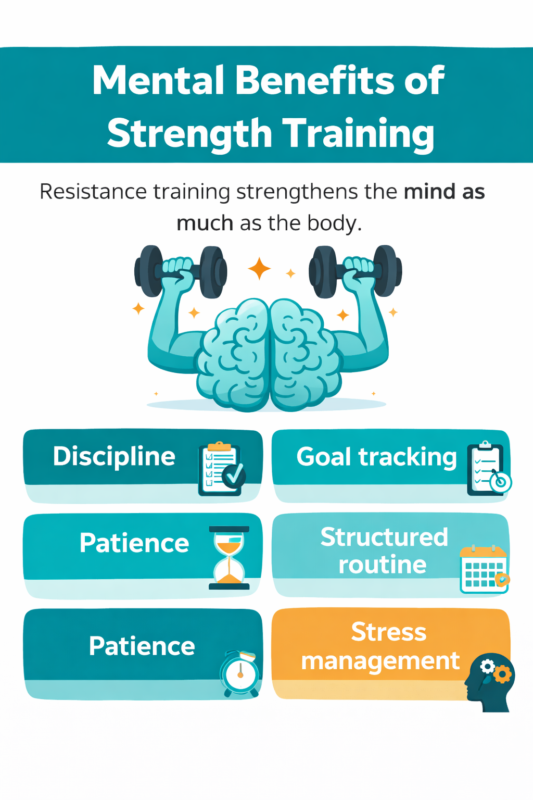
Resistance training strengthens the mind as much as the body.
Each workout reinforces:
- Discipline
- Goal tracking
- Patience
- Structured routine
- Stress management
Physical exertion also helps regulate tension and promote emotional clarity. Many men find that regular training sessions serve as a mental reset.
Confidence grows gradually through repeated effort.
Avoiding Overtraining and Burnout
One common mistake is overtraining. More is not always better. Excessive intensity without recovery can reduce performance and increase fatigue.
Signs of imbalance may include:
- Persistent soreness
- Low motivation
- Decreased performance
- Sleep disruption
- Irritability
Build rest into your program intentionally. Sustainable strength requires balance.
Long-Term Wellness Benefits
Over time, strength training supports:
- Cardiovascular efficiency
- Joint stability
- Bone density
- Metabolic health
- Functional independence
These benefits compound year after year. Men who maintain resistance training into midlife and beyond often experience greater resilience and mobility.
Strength training is not a short-term project. It is a lifelong investment.
Integrating Strength into a Balanced Lifestyle
Training alone is not enough. True vitality comes from combining physical effort with supportive habits.
Pair strength sessions with:
- Daily movement outside the gym
- Stress management practices
- Consistent meal timing
- Outdoor exposure to natural light
- Digital balance
When these pillars align, energy becomes predictable rather than fluctuating.
Discipline Creates Dependable Power
The most powerful transformation comes not from dramatic changes, but from small, repeated actions.
Three structured workouts per week, maintained for years, create greater impact than short bursts of extreme training.
Track progress.
Increase resistance gradually.
Focus on proper form.
Celebrate small improvements.
Consistency builds identity. Identity builds confidence.
Building Sustainable Performance
Modern life will always present challenges. Work demands will increase. Responsibilities will evolve. Stress will appear in different forms.
A disciplined strength routine becomes an anchor during these periods. It reinforces structure, stabilizes energy, and maintains confidence even when external circumstances fluctuate.
True performance is not about peak moments. It is about reliable daily energy.
Available Strength Options for Individual Needs
When discussing performance-focused lifestyles and structured wellness routines, some individuals explore additional supportive solutions as part of their broader health strategy. In such cases, it is helpful to understand that options are available in multiple strength variations.
Commonly available strengths include:
- Fildena 25 mg
- Fildena 50 mg
- Fildena 100 mg
- Fildena 120 mg
- Fildena 150 mg
- Fildena 200 mg
These different strengths are designed to accommodate varying individual preferences and professional recommendations. Choosing the appropriate strength should always be based on personal health factors and guidance from a qualified healthcare professional.
When integrated responsibly within a balanced routine that includes strength training, proper nutrition, structured recovery, and consistent sleep, informed decisions can support long-term stability and confidence.
Final Thoughts
Strength training is more than lifting weights. It is a commitment to long-term vitality, mental clarity, and disciplined living.
When paired with balanced nutrition, quality sleep, and stress awareness, resistance training becomes one of the most powerful tools for sustainable men’s wellness.
True strength is quiet. It is steady. It is built through consistent action.
Invest in structured movement. Protect your recovery. Maintain balance.
Over time, these habits create dependable power — the kind that supports every area of life.